The Seed Packet Detail That Ruins Tomato Yields (And How to Plan Tomatoes the Right Way)
The Seed Packet Detail That Ruins Tomato Yields (And How to Plan Tomatoes the Right Way)
Jan 2, 2026
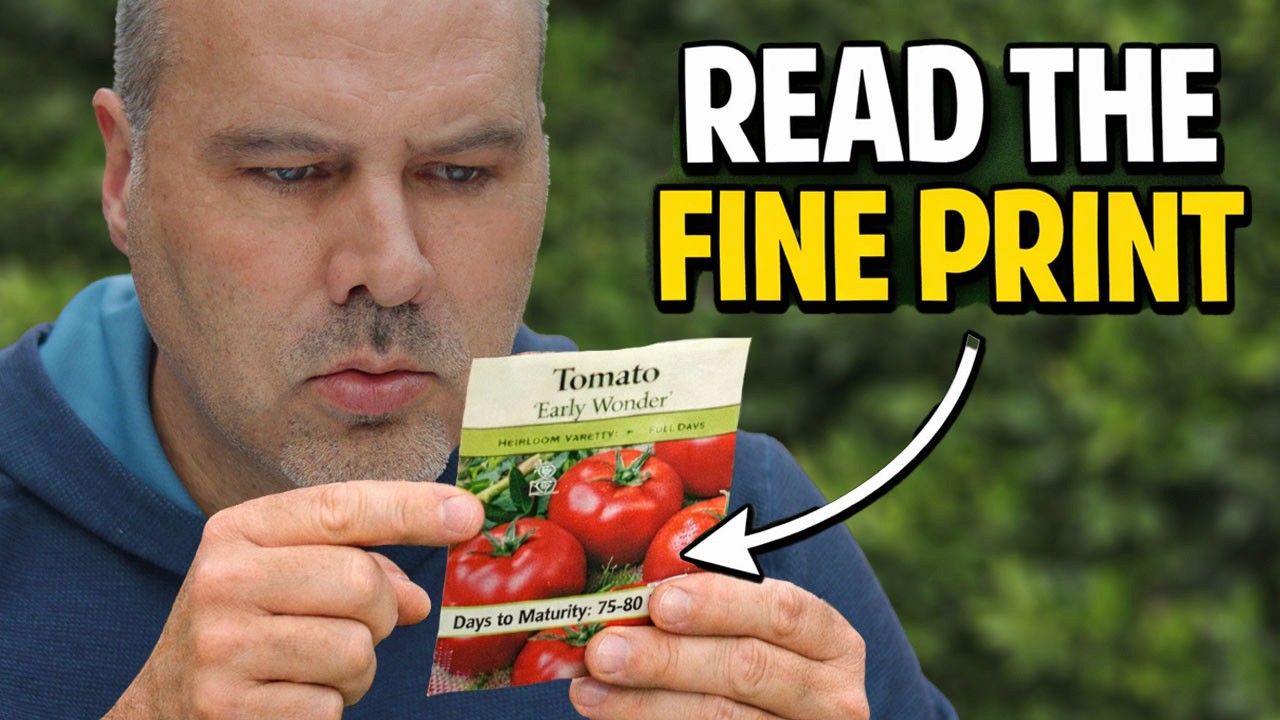
The Seed Packet Detail That Ruins Tomato Yields
(And How to Plan Tomatoes the Right Way)
If you’ve ever grown tomatoes that looked healthy but didn’t produce the way you expected, you’re not alone.
Many gardeners blame heat, fertilizer, pests, or bad luck. But in many cases, the real issue happens before the plants ever go into the ground.
It comes down to one misunderstood detail on the seed packet — and how that detail interacts with your local climate.
In this guide, you’ll learn what that detail really means, why it causes problems for so many gardeners, and how to plan tomatoes so your season actually matches the plant.
The Seed Packet Number Most Gardeners Misunderstand
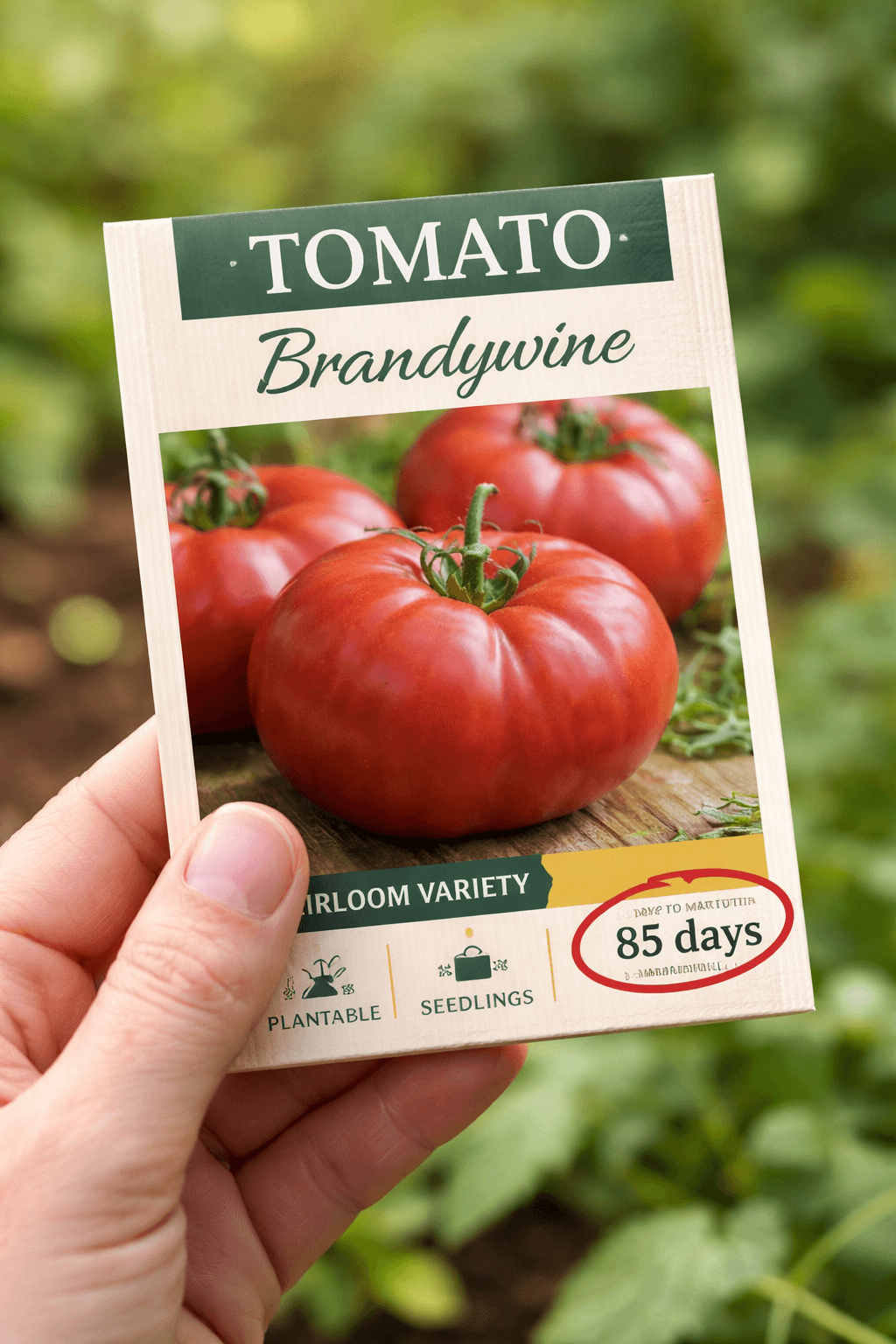
Most tomato seed packets includes a number called Days to Maturity, or they should!
Most gardeners interpret it like this:
“This tomato will produce fruit X days after I sow these.”
That interpretation makes sense — but it isn’t how the number actually works.
What “Days to Maturity” Really Means
Days to maturity does not mean:
Days from seed to harvest
It does mean:
Days from transplant to harvest
Under ideal growing conditions
That distinction matters far more than most gardeners realize.
And the phrase ideal conditions hides an important assumption — one that doesn’t apply everywhere.
You can use my FREE GardenGuide planting calendar to see when nighttime temperatures typically rise in your area and plan tomatoes around your real growing window.
The Hidden Limiting Factor: Nighttime Temperatures
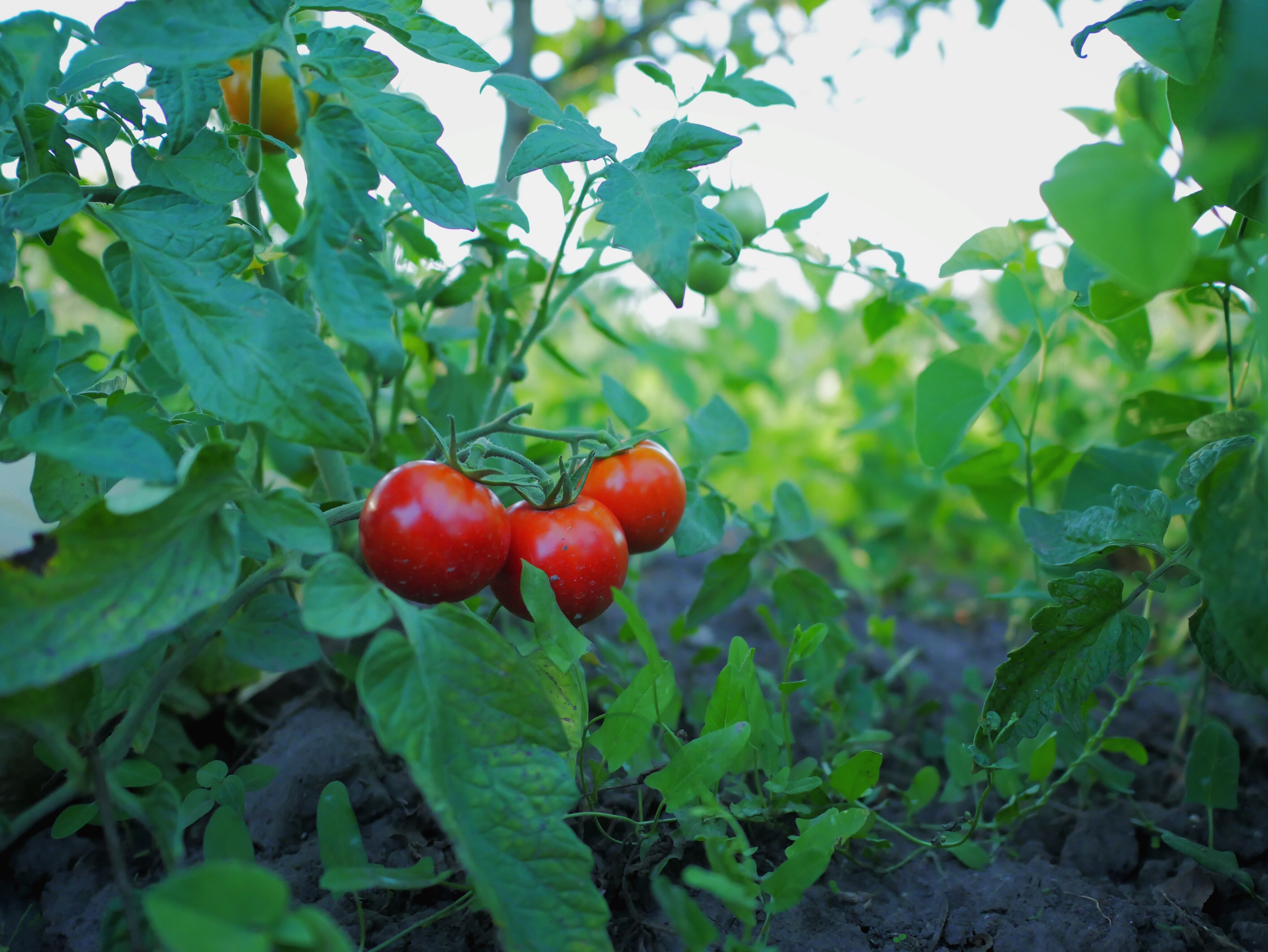
Tomatoes are extremely sensitive to nighttime temperatures, especially during flowering.
For most tomato varieties:
Once nighttime temperatures stay above 70°F (21°C), fruit set begins to decline
Once nighttime temperatures stay above 75°F (24°C), fruit set can nearly stop
What makes this confusing is that the plant itself often still looks healthy:
Leaves stay green
Growth continues
Flowers may still appear
But pollination quietly suffers.
This is why so many gardeners say:
“My tomatoes just stopped producing.”
The plant didn’t fail.
The temperature window closed.
Why Planning Tomatoes by Frost Dates Doesn’t Work
Most tomato advice tells gardeners to plan between:
Last frost
First frost
The problem is that tomatoes don’t care about frost dates.
They care about how many cool enough nights they get before sustained summer heat arrives.
That stretch of time — not the frost calendar — is your productive tomato window.
In many regions, especially warm or humid climates, that window is much shorter than the frost-to-frost timeline suggests.
The Real Tomato Planning Window
Instead of asking:
“When is my last frost?”
A better question is:
“When do nighttime temperatures stay consistently above 70°F?”
Your tomato season runs from:
Transplant date
toThe point when nights stay too warm for reliable fruit set
That’s the number that actually matters.
A Simple Example
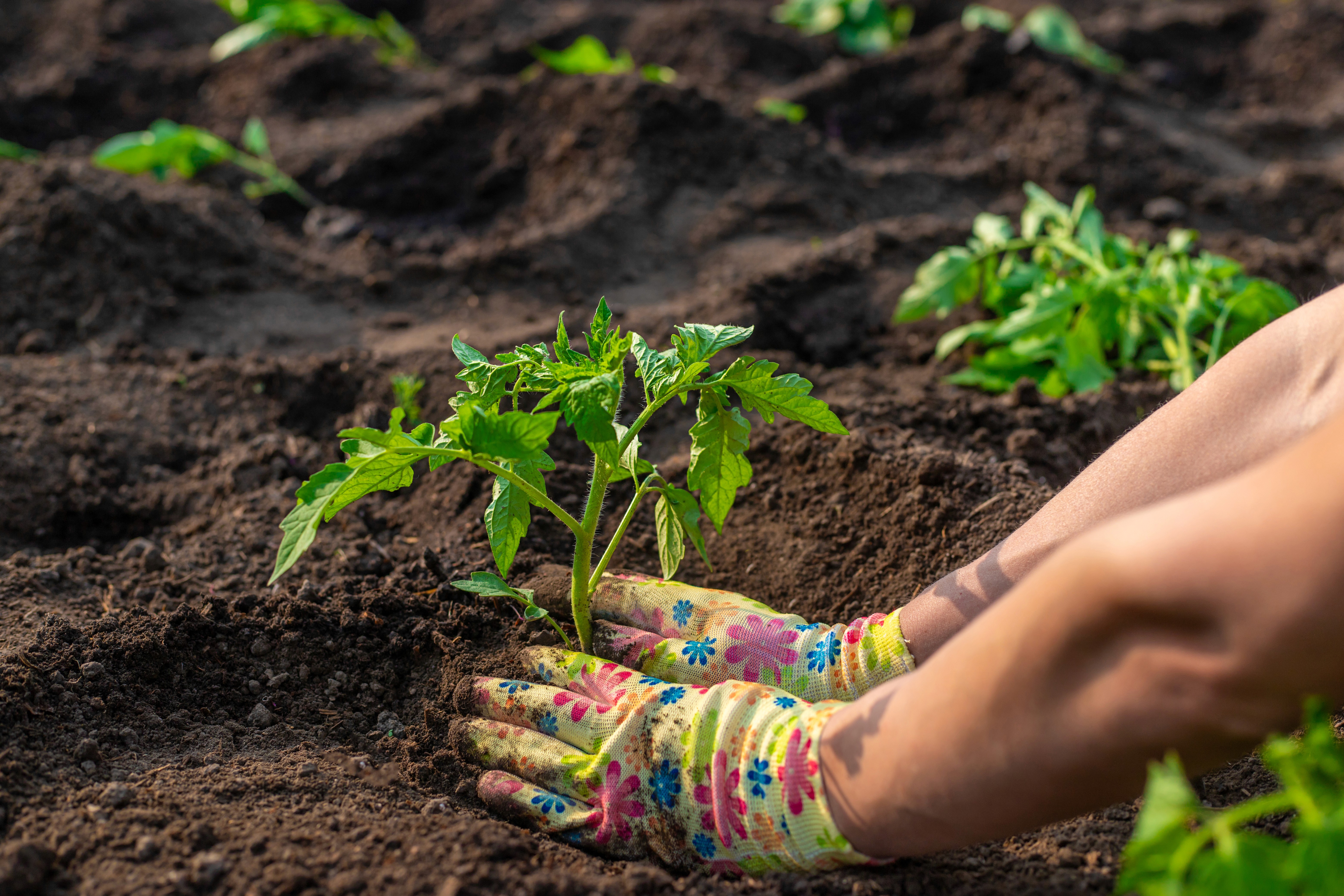
Let’s say:
You transplant tomatoes in early April
Your nighttime temperatures stay below 70°F until mid-June
That gives you roughly 65–70 productive days.
If you choose a tomato variety that needs:
85–90 days to mature
Then the season was never long enough for that variety to reach its full potential — no matter how well you cared for it.
That’s not a gardening mistake.
That’s a mismatch between the plant and the climate.
Why Common “Fixes” Don’t Solve the Problem
When tomatoes struggle, gardeners are often told to:
Start seeds earlier
Fertilize more
Add shade cloth
These can help with stress, but they do not extend your productive window.
Starting earlier doesn’t change summer night temperatures
Fertilizer doesn’t fix pollination issues
Shade cloth doesn’t cool nights
If the variety doesn’t fit your window, the outcome is limited.
Why Some Tomatoes Succeed Where Others Fail
This planning mistake explains a lot of common experiences:
Cherry tomatoes succeed where slicers struggle
Early and mid-season varieties outperform late ones
Some heirlooms struggle in warm-night climates
Those tomatoes aren’t bad.
They’re just designed for a different growing window.
If you want help narrowing things down, this video on choosing tomato varieties for your climate walks through which types tend to perform best in different regions.
How to Plan Tomatoes the Right Way (Step-by-Step)
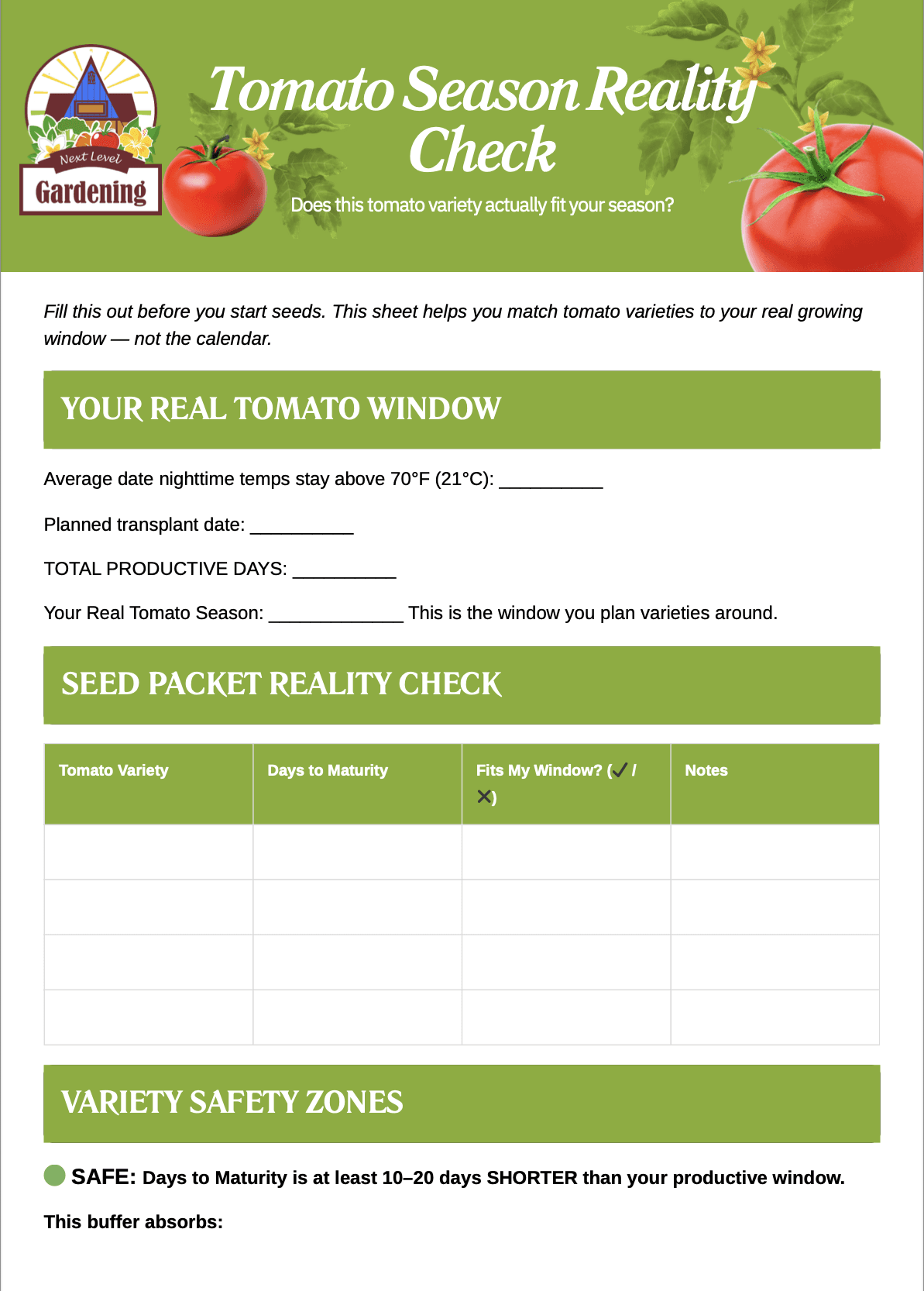
If you want this process written out in a simple, printable format, I’ve put together a one-page tomato planning PDF you can use each season.
Here’s a simple, reliable approach:
Step 1: Identify Your Nighttime Temperature Cutoff
Look up historical weather data and note:
When nighttime temperatures stay consistently above 70°F
Step 2: Count Backward
From that date, count backward to your transplant date.
That span is your real tomato season.
Step 3: Choose Varieties That Fit
Select tomato varieties whose days to maturity fit comfortably inside that window.
Give yourself a buffer — don’t cut it close.
Why This Makes Tomato Growing Feel Predictable Again
When tomatoes are planned around their real limits:
Yields become more consistent
Variety selection makes sense
Seasons feel less random
Most frustration disappears once the timing finally matches the plant.
Final Thought
If tomatoes have ever felt unpredictable to you, this is usually the missing piece.
You weren’t late.
You weren’t careless.
And you didn’t mess it up.
You were planning with incomplete information.
Once you plan tomatoes around their real limits, everything else gets easier.
The Seed Packet Detail That Ruins Tomato Yields
(And How to Plan Tomatoes the Right Way)
If you’ve ever grown tomatoes that looked healthy but didn’t produce the way you expected, you’re not alone.
Many gardeners blame heat, fertilizer, pests, or bad luck. But in many cases, the real issue happens before the plants ever go into the ground.
It comes down to one misunderstood detail on the seed packet — and how that detail interacts with your local climate.
In this guide, you’ll learn what that detail really means, why it causes problems for so many gardeners, and how to plan tomatoes so your season actually matches the plant.
The Seed Packet Number Most Gardeners Misunderstand
Most tomato seed packets includes a number called Days to Maturity, or they should!
Most gardeners interpret it like this:
“This tomato will produce fruit X days after I sow these.”
That interpretation makes sense — but it isn’t how the number actually works.
What “Days to Maturity” Really Means
Days to maturity does not mean:
Days from seed to harvest
It does mean:
Days from transplant to harvest
Under ideal growing conditions
That distinction matters far more than most gardeners realize.
And the phrase ideal conditions hides an important assumption — one that doesn’t apply everywhere.
You can use my FREE GardenGuide planting calendar to see when nighttime temperatures typically rise in your area and plan tomatoes around your real growing window.
The Hidden Limiting Factor: Nighttime Temperatures
Tomatoes are extremely sensitive to nighttime temperatures, especially during flowering.
For most tomato varieties:
Once nighttime temperatures stay above 70°F (21°C), fruit set begins to decline
Once nighttime temperatures stay above 75°F (24°C), fruit set can nearly stop
What makes this confusing is that the plant itself often still looks healthy:
Leaves stay green
Growth continues
Flowers may still appear
But pollination quietly suffers.
This is why so many gardeners say:
“My tomatoes just stopped producing.”
The plant didn’t fail.
The temperature window closed.
Why Planning Tomatoes by Frost Dates Doesn’t Work
Most tomato advice tells gardeners to plan between:
Last frost
First frost
The problem is that tomatoes don’t care about frost dates.
They care about how many cool enough nights they get before sustained summer heat arrives.
That stretch of time — not the frost calendar — is your productive tomato window.
In many regions, especially warm or humid climates, that window is much shorter than the frost-to-frost timeline suggests.
The Real Tomato Planning Window
Instead of asking:
“When is my last frost?”
A better question is:
“When do nighttime temperatures stay consistently above 70°F?”
Your tomato season runs from:
Transplant date
toThe point when nights stay too warm for reliable fruit set
That’s the number that actually matters.
A Simple Example
Let’s say:
You transplant tomatoes in early April
Your nighttime temperatures stay below 70°F until mid-June
That gives you roughly 65–70 productive days.
If you choose a tomato variety that needs:
85–90 days to mature
Then the season was never long enough for that variety to reach its full potential — no matter how well you cared for it.
That’s not a gardening mistake.
That’s a mismatch between the plant and the climate.
Why Common “Fixes” Don’t Solve the Problem
When tomatoes struggle, gardeners are often told to:
Start seeds earlier
Fertilize more
Add shade cloth
These can help with stress, but they do not extend your productive window.
Starting earlier doesn’t change summer night temperatures
Fertilizer doesn’t fix pollination issues
Shade cloth doesn’t cool nights
If the variety doesn’t fit your window, the outcome is limited.
Why Some Tomatoes Succeed Where Others Fail
This planning mistake explains a lot of common experiences:
Cherry tomatoes succeed where slicers struggle
Early and mid-season varieties outperform late ones
Some heirlooms struggle in warm-night climates
Those tomatoes aren’t bad.
They’re just designed for a different growing window.
If you want help narrowing things down, this video on choosing tomato varieties for your climate walks through which types tend to perform best in different regions.
How to Plan Tomatoes the Right Way (Step-by-Step)
If you want this process written out in a simple, printable format, I’ve put together a one-page tomato planning PDF you can use each season.
Here’s a simple, reliable approach:
Step 1: Identify Your Nighttime Temperature Cutoff
Look up historical weather data and note:
When nighttime temperatures stay consistently above 70°F
Step 2: Count Backward
From that date, count backward to your transplant date.
That span is your real tomato season.
Step 3: Choose Varieties That Fit
Select tomato varieties whose days to maturity fit comfortably inside that window.
Give yourself a buffer — don’t cut it close.
Why This Makes Tomato Growing Feel Predictable Again
When tomatoes are planned around their real limits:
Yields become more consistent
Variety selection makes sense
Seasons feel less random
Most frustration disappears once the timing finally matches the plant.
Final Thought
If tomatoes have ever felt unpredictable to you, this is usually the missing piece.
You weren’t late.
You weren’t careless.
And you didn’t mess it up.
You were planning with incomplete information.
Once you plan tomatoes around their real limits, everything else gets easier.
Free Weekly Garden Tips
Join my free newsletter to receive weekly garden insights + things I think you'll find interesting!
Free Weekly Garden Tips
Join my free newsletter to receive weekly garden insights + things I think you'll find interesting!
Free Weekly Garden Tips
Join my free newsletter to receive weekly garden insights + things I think you'll find interesting!
Let's grow your dream garden.

Subscribe
Join our newsletter to stay up to date on everything happening!
By subscribing you agree to our Privacy Policy and provide consent to receive updates from our company.
Let's grow your dream garden.
Subscribe
Join our newsletter to stay up to date on everything happening!
By subscribing you agree to our Privacy Policy and provide consent to receive updates from our company.
Let's grow your dream garden.
Subscribe
Join our newsletter to stay up to date on everything happening!
By subscribing you agree to our Privacy Policy and provide consent to receive updates from our company.